Key Takeaways
- Form 1099-MISC reports payments over $600 for rents, prizes, and medical fees.
- Recipient copies of Form 1099-MISC are due February 2, 2026.
- E-filing for Form 1099-MISC is due March 31, 2026.
- Form 1099-K is required for over $20,000 and 200 transactions in 2025.
- Avoid double reporting by not filing 1099-MISC for payments reported on 1099-K.

OBBBA Update
OBBBA made a significant change to both Form 1099-MISC and 1099-K. The 2026 Form 1099-MISC rules raise the federal reporting threshold from $600 to $2,000 for certain payment categories (reported in 2027). This change applies to rents, medical and health care payments, and generally applicable Box 3 other income/prizes/awards. It does not change the rules for royalties or gross proceeds paid to attorneys. The 24% backup withholding rate also stays the same, and if backup withholding is taken, filing is required regardless of amount. For Form 1099-K, the reporting threshold got restored to the pre-ARPA level. TPSO reporting applies when a participating payee exceeds $20,000 in aggregate payments and more than 200 transactions during the calendar year, while payment card transactions remain reportable without the TPSO threshold.
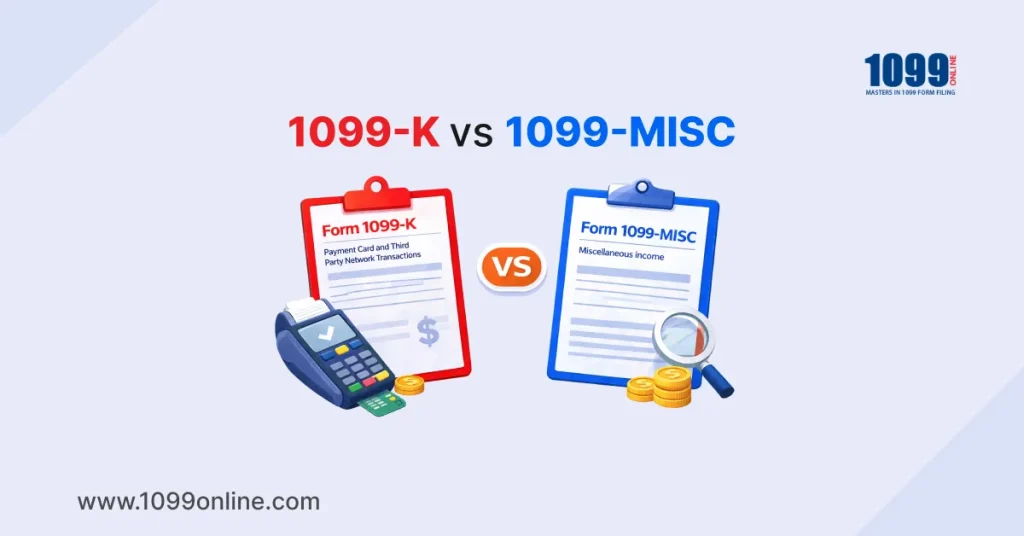
Both Form 1099-K and Form 1099-MISC report nonwage income, but the IRS treats them differently, so they are easy to mix up. Knowing all the key differences between these two forms can help a payer decide which form to issue and avoid duplicate reporting and compliance penalties that can quickly add up. Read on for clarity on 1099-K vs. 1099-MISC reporting rules, trigger thresholds, and more.
What Is Form 1099-MISC and Who Files It?
Form 1099-MISC reports miscellaneous payments made directly by a payer, like rents, prizes, medical and health care payments, or gross proceeds paid to attorneys.
Common reporting categories for Form 1099-MISC include:
| Category | 1099-MISC Box | What to Report | Notes |
|---|---|---|---|
| Rents | Box 1 | Office space, equipment/machinery, and farmland leases | |
| Other income | Box 3 | Prizes, awards, and taxable research grants | |
| Medical and health care payments | Box 6 | Payments to clinics, doctors, and other medical providers (including corporations) | Do not report payments to pharmacies for prescription medicines |
| Attorney proceeds | Box 10 | Gross proceeds paid to an attorney (including law firms that are corporations) | Usually related to settlements; report gross amount |
Note:
- A payer generally files at $2,000 or more for rents, medical and health care payments, and applicable Box 3 other income/prizes/awards paid to a single recipient. Gross proceeds paid to attorneys remain reportable at $600.
- For royalties, the threshold is $10.
- If backup withholding (24%) applies, the form must be filed regardless of the amount.
Key 1099-MISC Deadlines
Furnish the recipient copies by:
- No amount in Box 8 or 10: February 1, 2027 (because January 31, 2027, falls on a Sunday).
- Statements reporting Box 8 or Box 10: February 16, 2027, due to weekend/holiday shift.)
Paper filing due:
- March 1, 2027 (because February 28, 2027, falls on a Sunday).
eFiling with the IRS:
- Due by March 31, 2027.
Note: eFiling is mandatory if you are filing a combined total of 10 or more information returns in the calendar year, aggregated across almost all return types (for example, 1099s and W-2s).
A core part of payer 1099 compliance for the 2027 filing season is collecting Form W-9 before issuing payments, verifying TIN accuracy, filing on time, and keeping copies of filed information returns (or the ability to reconstruct them) for at least 3 years from the due date, or 4 years if federal tax was withheld (for example, backup withholding).
What Is Form 1099-K and Who Files It?
Form 1099-K is used by payment-card settlement entities and Third-Party Settlement Organizations (TPSOs). It reports total transactions handled by platforms such as PayPal, Stripe, Etsy, or Uber.
Here’s what the 1099-K reporting requirements look like:
- Box 1a: Total gross reportable payment card/third-party network payments for goods or services. ‘Gross’ means before fees, refunds, chargebacks, shipping, or other adjustments.
- Boxes 5a-5l: Monthly gross amounts (January–December) that sum to Box 1a. Many states use monthly data to aid matching.
Note that personal transfers aren’t included, and only payments for goods or services are reportable.
Starting with calendar year 2025, Form 1099-K no longer uses a single threshold for every type of payment (Card payments and TPSO payments) and has undergone several changes.
Under prior IRS transition guidance, third-party settlement organization (TPSO) transactions were expected to be reported when aggregate payments exceeded $2,500 for the year. However, the One Big Beautiful Bill Act (OBBBA) restored the federal TPSO reporting threshold to the pre-ARPA standard of more than $20,000 in gross payments and more than 200 transactions.
On the other hand, when a payee accepts credit, debit, or stored-value card payments for goods or services, the payment settlement entity generally files and furnishes Form 1099-K for those reportable card transactions, no matter how many payments were made or how much was paid.
Additionally, if TPSO backup withholding is taken under section 3406, Form 1099-K must be filed even below the normal threshold.
Each platform is evaluated separately, meaning transactions can’t be combined across apps or providers.
Several jurisdictions keep lower state-level thresholds (for example, Massachusetts- $600; Virginia- $600). Always verify the payee’s state rules.
Why the Difference Between 1099-K and 1099-MISC Matters
The IRS instructs payers not to report payments that the payment-card/TPSO entity must report on Form 1099-K to avoid duplicate reporting, which can leave recipients scrambling to fix their tax returns because the duplicate reporting can make income look overstated.
At the same time, it is important to know that failing to file a required 1099 may cost $60 to $340 per return, depending on how late it’s filed, or at least $680 per return if the IRS deems it as intentional disregard.
So, understanding the differences is really important. Here’s a simple way to remember who files what and which form to use:
- When payments are routed through a card processor or third-party platform, the payment settlement entity files Form 1099-K. Payers should not file a 1099-MISC/NEC for those same card/TPSO payments.
- When payments are made directly by the business (for example, cash, check, ACH), the payer files Form 1099-MISC if the amount/category requires it.
1099-K vs. 1099-MISC: Key Differences at a Glance
While both fall under the 1099 series, they serve different purposes. Here’s a quick payer reference guide:
| Aspect | Form 1099-K | Form 1099-MISC |
|---|---|---|
| Typical use case | Reports payment-card and third-party network transactions (e.g., Visa/Mastercard, PayPal, Stripe, Etsy, Uber). | Reports direct payments like rents, prizes/awards (other income), medical & healthcare payments, and gross proceeds to attorneys. |
| Who files | The payment settlement entity (card processor/merchant acquirer or TPSO). | The business payer/landlord/insurer who is making the direct payment. |
| Federal trigger | TPSO/third-party network payments must pass both tests: over $20,000 and over 200 transactions per recipient on the same platform. Payment card transactions stay reportable without using that TPSO threshold. | The updated 2026 payment rules generally set the Form 1099-MISC threshold at $2,000 for rents, applicable Box 3 other income/prizes/awards, and medical and health care payments reported in 2027. Royalties remain reportable at $10, gross proceeds paid to attorneys remain reportable at $600, and 24% backup withholding requires filing regardless of amount. |
| State-level exceptions | Several states use lower thresholds (e.g., Massachusetts $600; Virginia $600), so state filing can be required even when no federal 1099-K is due. | Generally tracks federal categories/amounts, but states can have their own filing rules (check state instructions). |
| Backup withholding | Possible for TPSOs; if backup withholding is taken, file Form 1099-K and report the withholding on Form 945. | Yes, if any 24% backup withholding occurs, you must file even below thresholds. |
| Common filing mistakes | Treating personal/non-goods-and-services transfers as reportable or reporting net instead of gross in Box 1a (fees/refunds/chargebacks don’t reduce Box 1a). | Skipping payments to incorporated medical providers (Box 6) or gross proceeds to attorneys (Box 10) — both reportable even if the payee is a corporation. |
Threshold and Exception Rules
Form 1099-K
Federal threshold: The over-$20,000 and over-200-transaction test applies to TPSO/third-party network transactions under section 6050W(e), and it is checked separately for each platform. Payment card transactions are different; they remain reportable on Form 1099-K without using the TPSO threshold.
Who files: The payment settlement entity (the card processor or TPSO). Marketplace or split-payout arrangements don’t change who has the filing duty.
State rules: Some states use lower thresholds (for example, $600). In those states, you may need to file a state 1099-K even when no federal 1099-K is required. If both state and federal rules are triggered, file at both levels.
Form 1099-MISC
When it applies: Use 1099-MISC for direct payments you make by cash, check, or ACH in these categories: rents (Box 1), prizes/awards (Box 3), medical & healthcare payments (Box 6), and attorney gross proceeds (Box 10).
Thresholds: For the 2026 tax year, you generally need to file Form 1099-MISC at $2,000 or more per payee for rents, applicable Box 3 other income/prizes/awards, and medical and health care payments. Royalties remain reportable at $10, gross proceeds paid to attorneys remain reportable at $600, and if any 24% backup withholding was taken, you must file even if the payment is below the normal threshold.
State exceptions: States can have their own rules. Many participate in the IRS Combined Federal/State Filing (CF/SF) program (the IRS forwards your federal 1099-MISC data), but participation varies by state and form. Some states still require you to file directly, especially when state income tax was withheld on the payment. Always check the recipient’s state instructions each year.
Form 1099-K or Form 1099-MISC? A Simple Decision Flow
Here’s a simple decision flow to help you understand whether Form 1099-K or Form 1099-MISC applies:
Step 1: Ask: Did the payment go through a card processor or a third-party platform (TPSO) like PayPal or Stripe? If yes, review 1099-K rules/thresholds. If no (i.e., not card and not TPSO), go to Step 2.
Step 2: If the payment was made directly by your business (check/ACH/cash), first screen for payments for services by nonemployees. Those belong on Form 1099-NEC.
Step 3: For direct payments that are not service payments, check the Form 1099-MISC category before applying a threshold.
Note: Do not report card/TPSO payments on 1099-MISC; those are 1099-K items.
Real-World Scenarios
To understand more closely when a payer files 1099-MISC and when a payment falls under 1099-K reporting requirements, see how the rules apply in everyday payer situations:
| Scenario | Correct Form/Box | Why This Applies |
|---|---|---|
| A marketplace like Etsy or Uber settles $22,000 over 230 transactions | 1099-K | Crosses the federal $20,000 and greater than 200 transactions test (applies per platform). |
| A business gives a $900 cash prize at an event | No federal Form 1099-MISC for 2026 payment activity reported in 2027, unless backup withholding applies | The prize is below the generally applicable $2,000 Box 3 other income/prize/award threshold. |
| A platform processes $12,000 in 180 transactions | No federal 1099-K (check state rules) | Does not meet the federal $20,000/200 test; some states (e.g., MA, VA) require 1099-K at $600, so state filing may still apply. |
| A restaurant lets a pop-up vendor run weekend sales through the restaurant’s credit card terminal, and the processor includes both businesses’ card receipts on the restaurant’s Form 1099-K. | The restaurant should use its records to separate the vendor’s receipts. As a nominee/middleman, it should file Form 1099-K with the IRS and furnish Form 1099-K to the vendor for the vendor’s share of the card receipts. | Keep the terminal-sharing agreement and payout records so the gross amount can be matched back to the right party. |
| Landlord refunds $650 rent via bank transfer | No 1099-MISC for the refund itself. Report only the year’s net rent in Form 1099-MISC, Box 1, when filing is required. | Refunds lower the rent amount paid for the year. If the refund brings net rent below $2,000, no federal Form 1099-MISC is required unless backup withholding applies. If you’ve already filed, issue a “CORRECTED” 1099-MISC with the updated Box 1 amount; don’t report a negative. |
| A payer withholds 24% tax on a $200 settlement (taxable, non-wage, paid directly to the claimant) | 1099-MISC, Box 3 (Other income) and Box 4 (Federal income tax withheld) | The settlement amount belongs in Box 3. Any backup withholding requires filing regardless of the amount, so report the withheld tax in Box 4. |
Note: If instead you paid $600 or more to the claimant’s attorney as an intermediary, report gross proceeds to the attorney on Form 1099-MISC, Box 10.
Common Filing Mistakes and Quick Fixes
Mistakes can be costly and stressful. Here are some common mistakes that payers make and ways to avoid or fix them:
| Mistake | Why It’s a Problem | Correct Action |
|---|---|---|
| Mixing up 1099-MISC and 1099-K | Reporting PayPal/Stripe payouts on 1099-MISC creates duplicate reporting (card/TPSO payments must be reported by the payment settlement entity on 1099-K). | File a “CORRECTED” 1099-MISC to remove the amount; do not file a 1099-K as the payer. Before filing, reconcile each payee by payment method and include only the direct-payment portion on Form 1099-MISC. |
| Reporting the same rent twice | Double entries inflate totals and can draw scrutiny. | Follow IRS correction procedures and use “CORRECTED,” not “VOID,” for corrections; the VOID box is not a valid correction method. |
| Missing corporate attorney or medical payments | Payments to incorporated medical providers (Box 6) and gross proceeds to attorneys (Box 10) are still reportable. | Flag such vendors and file correctly; penalty for intentional disregard is at least $680 per return. |
| Ignoring updated thresholds | Several states keep lower 1099-K thresholds. | Verify current federal and state rules before filing. |
FAQs
1. Can one recipient get both 1099-K and 1099-MISC forms?
Yes, but only for different payment types and when each form’s rules are met separately (e.g., platform/card payments on 1099-K and direct payments like rent or prizes on 1099-MISC). Do not report the same dollars on both forms.
2. Are personal gifts or reimbursements via apps reportable?
No. 1099-K covers payments for goods or services. Personal gifts, cost-sharing, or reimbursements aren’t reportable on 1099-K.
3. Is the 1099-MISC threshold increasing in 2026?
Yes. The 2026 payment year raises the federal threshold from $600 to $2,000 for certain Form 1099-MISC categories. This includes rents, applicable Box 3 other income/prizes/awards, and medical and health care payments. Royalties stay reportable at $10, gross proceeds paid to attorneys stay reportable at $600, and backup withholding still requires filing regardless of the amount.
4. How should a payer report split settlements between client and attorney?
If the attorney was paid $600 or more as an intermediary, the gross proceeds are reported on Form 1099-MISC, Box 10. For payments directly to the claimant, taxable amounts should be reported on 1099-MISC, Box 3. If the client’s amount is nontaxable (e.g., compensatory damages for physical injury), there is no need to file a 1099 for that part.
5. What if a payer misses the filing deadline?
File as soon as possible. Penalties increase the later you file (tiers apply at 30 days, by Aug. 1, and after Aug. 1). Intentional disregard is at least $680 per return with no max.
6. Can a payer file below thresholds voluntarily?
You can, but only if it’s correct and won’t duplicate another form (like a 1099-K). Unnecessary filings can cause confusion.
Closing Thoughts
For payers, getting 1099-K vs. 1099-MISC right is more than compliance; it’s protection against mismatched records and unnecessary IRS correspondence.
Remember to use Form 1099-K for payment card and third-party network transactions and use Form 1099-MISC for direct payments like rents, prizes/awards, medical and health care payments, and gross proceeds paid to attorneys once the category-specific filing threshold is met.
1099Online helps with secure uploads, built-in TIN checks, and IRS eFiling.
Ready to manage Form 1099 filings from a single login?